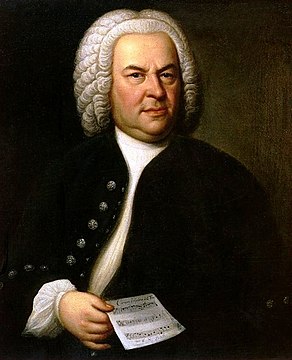
Below is the complete set of Preludes and Fugues by J.S. Bach known as The Well-Tempered Clavier, Books II and II, published around 1722 and 1742 respectively.
What was the composer's intention when he used the term "well tempered"?
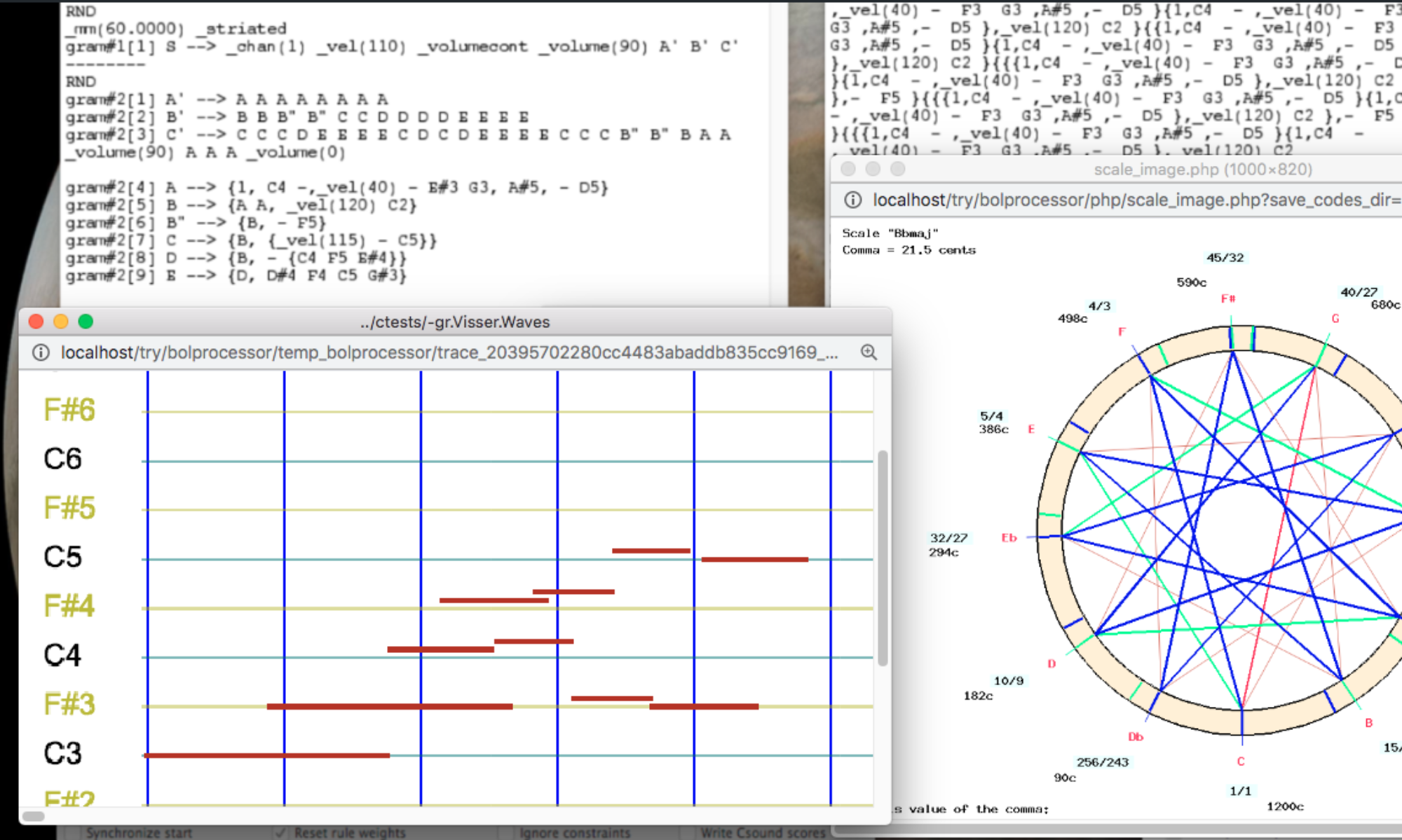
All the scores in this corpus have been converted from MusicXML to Bol Processor syntax — see Importing MusicXML scores. This paved the way for tonal analysis using Bol Processor's tonal batch processing tool, described in detail on the Bach Well-tempered tonal analysis page.
Each musical work has been compared with a set of tuning schemes implemented on the Bol Processor. These include temperaments documented by Pierre-Yves Asselin ([1985], 2000) and "natural" scales systematically constructed — see pages Microtonality and Creation of just-intonation scales.
The matching algorithm selected the tuning scheme(s) that best matched the definitions of 'consonant' and 'dissonant' melodic and harmonic intervals. Two sets of definitions were used: "standard" and " alternative". Obviously, under any hypothesis, some tuning schemes are more suitable than others for achieving the composer's presumed perception of 'consonance'. Therefore, the following sound productions of the Preludes and Fugues, with their "best" tuning schemes, should not be taken as a definitive answer to the question of temperament discussed by Bach's students and followers. They may, however, come closest to what the composer intended, within the limits of the ear's ability to discriminate between intervals.
Note that if several tuning schemes ranked first for matching a piece, only one of them was used for the demo. It is possible that another may sound better.
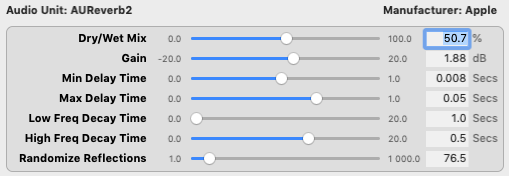
All the pieces were played and recorded on a Csound instrument, similar to a harpsichord, allowing a clear appreciation of the tonal intervals. This kind of "magnifying glass" view of the tonal intervals produced harsh sounding versions, available in the Standard (raw) and Alternate (raw) folders. These have been post-processed with a bit of reverb to produce softer attacks. The post-processed sound files are the ones accessed in the tables below. Readers familiar with sound editing are invited to download the raw files and suggest better post-processing options.
The last two columns of each table contain recordings of human interpretations of the same works by outstanding harpsichordists. These explore dimensions of musicality that the mechanical interpretation of the score with perfect tonal intervals could not reach. It remains that the challenge of accurate tonality was a priority for this corpus, as evidenced by the title "well-tempered" given by its composer.
Book I sound examples

These Bol Processor + Csound recordings may be reused under the Creative Commons Attribution-NonCommercial-ShareAlike 4.0 International (CC BY-NC-SA 4.0) licence. Attribution includes links to the present page, to Csound and to the author/editor of its MusicXML score (listed on the Bach Well-tempered tonal analysis page).
➡ Listen with headphones or a very good sound system!
The recordings of Wanda Landowska's (1879-1959) are from YouTube. Other interpretations are courtesy of Wikimedia Commons.
As explained on the Bach Well-tempered tonal analysis page, the D'Alambert-Rousseau temperament was found to be equivalent to H.A. Kellner's BACH in terms of scale intervals.
Book II sound examples
The recordings of Ottavio Dantone are from YouTube.
As explained above, D'Alambert-Rousseau temperament was found to be equivalent to H.A. Kellner's BACH.
More examples?
Interestingly, similar classifications of tuning systems apply to another famous corpus by J.S. Bach: the Goldberg Variations (1741). Read the Bach well-tempered tonal analysis page.
➡ Listen to the synthesis of Goldberg Variations with Sauveur's meantone temperament.
➡ Listen to the synthesis of Goldberg Variations with D'Alembert-Rousseau temperament.
➡ Listen to the Aria on a harpsichord tuned with Werckmeister III meantone temperament.
In the same period (1730), the French musician François Couperin composed Les Ombres Errantes, for which our tonal analysis suggests a Rameau en sib temperament:
with a “Rameau en sib” temperament ➡ Image
Source: MusicXML score by Vinckenbosch in the MuseScore community
Classical guitarist Brandon Acker has provided a comprehensive, practical explanation of how temperament was used in Baroque music instead of modern "equal temperament" tuning (https://www.youtube.com/watch?v=tiKCORN-6m8). He said: "Guitars today all have fixed metal frets but not only was this not always the case, in fact, guitars with tied on gut frets (made of sheep intestine) allowed guitarists 300 years ago to play MORE in-tune than guitars can today." Listen, for instance, to his interpretation of Bach's Prelude in G (BWV 1007), which was originally written for the cello:
Despite reducing tonality issues to the distinction of enharmonic notes and temperament to 1/4 comma classical meantone 'pure major thirds' (Asselin, 1985, p. 76), Acker's empirical, ear-based approach is fully consistent with ours. Both methods are based on perceiving intervals in terms of consonance/dissonance rather than speculating about ratios of integer numbers.
Conclusive remarks

The title of this corpus, The Well-Tempered Clavier, suggests that its composer intended to demonstrate the suitability of one or more temperaments for the performance of musical works in any tonality. As previously stated, this does not imply that they were all intended to conform to the same unique solution; however, it makes sense to hypothesize that the same instrument and tuning scheme were utilized for the entirety of the set. This has led to speculation by J.S. Bach's pupils, who were not instructed on how to proceed. In those days, part of the prestige of great artists was based on their ability to withhold information…
It would be illogical in the context of human musicians and physical instruments to play a prelude in one tuning and then retune the instrument solely for the purpose of playing the fugue. Consequently, these audio examples are not intended to emulate a genuine performance. They can, however, assist in evaluating the suitability of a preferred tuning scheme for each musical work.
A "deaf musicologist" employs a method of tonality assessment that involves measuring melodic and harmonic intervals in terms of frequency ratios. The results of this assessment depend on the values (weights) assigned to certain ratios in advance. Our findings demonstrate that equally meaningful sets of hypotheses can lead to completely different results, which only trained ears can distinguish. The combination of hypotheses may not elucidate the situation. An apparent preference for a tuning scheme may be the result of a numerical artefact rather than proof of its validity.
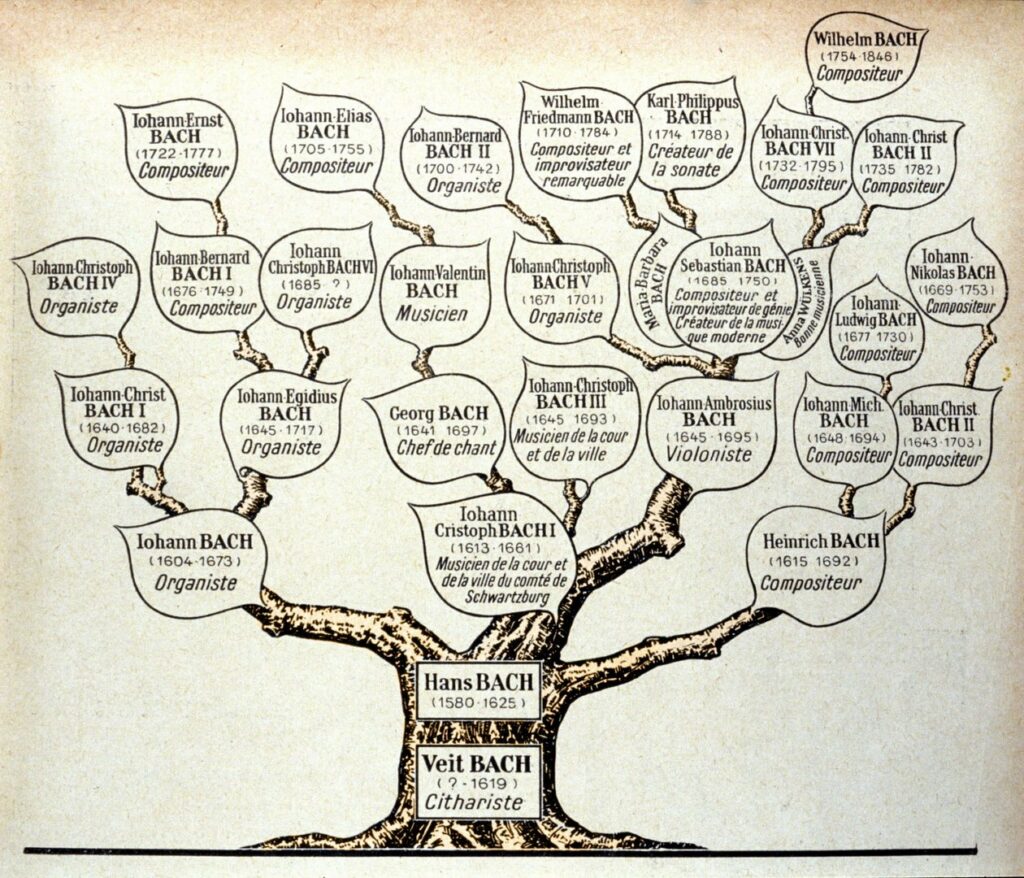
A meticulous listening to these recordings, with the exclusion of the somewhat inelegant rendering of fast trills in the lower octave, reveals a musical dimension that cannot be reduced to the concept of 'intervals'. Each piece can be likened to a precious stone, exhibiting an astonishing regularity in its tonal structure. The listener is invited by the artist to explore all sides of the crystal and to appreciate its purity: a 'tonal landscape'. In this approach, the slightest imperfection, such as a few cents up or down, is amplified by our awareness of the structure. In short, the most important feature may be less the choice of a structure than its consistency in rendering each musical phrase.
It is unclear whether J.S. Bach intended to create a specific musical temperament when composing The Well-Tempered Clavier. As suggested above, the highest rating in terms of intervals may not be the most appropriate. Therefore, this question remains for art historians and musicologists to answer. However, based on the sound examples, playing this repertoire on instruments that are not properly tuned in terms of consonance is akin to displaying imitation diamonds.
As a departure from this rather normative statement, I recommend listening to the beautiful interpretation on the piano by Marta Czech of Franz Liszt's transcription of Bach's Prelude and Fugue in A minor, BWV 543. This is a convincing indication that musical works composed for instruments that highlight their tonal structure lend themselves to innovative, rich interpretations on instruments that offer a wider range of expressive features. Even when tuned in equal temperament, the lack of a well-tempered tonal structure goes unnoticed in the piano.
Reference(s)
Asselin, P.-Y. Musique et tempérament. Paris, 1985, republished in 2000: Jobert. Soon available in English.
Musicians interested in continuing this research and related development can use the Bol Processor BP3 to process musical works and implement further tuning procedures. Follow the instructions on the Bol Processor ‘BP3’ and its PHP interface page to install BP3 and learn its basic operation. Download and install Csound from its distribution page.
Bernard Bel — January 2022
Please join the BP users help forum , BP open discussion forum and/or the BP developers list to stay in touch with the progress of work and discuss related theoretical issues.